

In Central Europe (contemporary Austria, Germany, and Switzerland), people have been consistently producing acidified and leavened bread for over 5000 years. An archeological finding of this type of bread, dating from 3600 BC, has been recently excavated near Bern, in Switzerland (Währen, 2000), while excavations in Austria (dating from 1800 BC) and Quedlinburg, Germany (dating from 800 BC) revealed similar findings (Spicher and Stephan, 1982).
It is believed that Greeks living in Marseille introduced sourdough bread in Gaul (contemporary France) in the 4th century BC, while it was during the Middle Ages (400–1400 AD) and only in the cities, where the profession of the baker appeared (Cappelle et al., 2013).
In North America, the use of sourdough as a leavening agent is linked with the arrival of European origin settlers spread around the continent, among others the gold miners during the gold rush in the mid-19th century in the west coast region. In San Francisco, still nowadays, bakeries claim to use sourdough that has been propagated for over 150 years, harboring Kazachstania exigua as the predominant yeast, instead of the brewer’s yeast, while Lactobacillus sanfranciscensis was isolated from San Francisco sourdough (Cappelle et al., 2013).
https://www.sciencedirect.com/topics/food-science/sourdough-bread
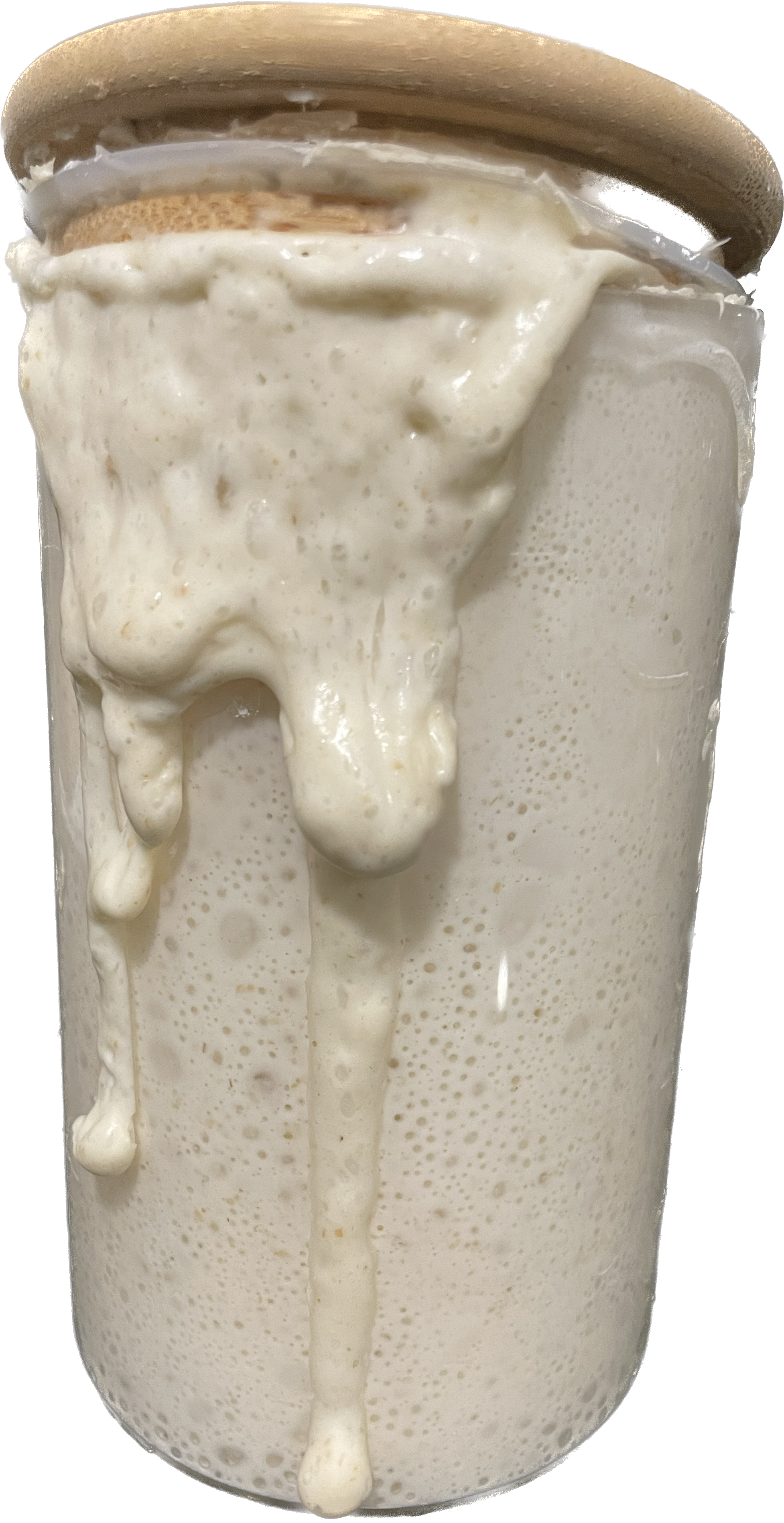
I can’t help but feel overjoyed when it comes to making sourdough bread! It all starts with a pre-ferment, also known as the “starter” or “leaven”. This mixture of flour and water contains a variety of naturally occurring microorganisms including wild yeast and lactobacilli.
In my case I bring from Galicia some starter and it took me about a month bring this to life, sometimes temperature, humidity, air conditioning etc, but finally I did it. Say welcome to Pan Gallego! .
What’s amazing is that flour actually already contains different types of yeasts and bacteria. Once mixed with water, amylase breaks down the starch into glucose and maltose which feed sourdough’s natural yeast. Over time with frequent refreshments using fresh dough, we end up with an incredibly tasty and stable culture.