

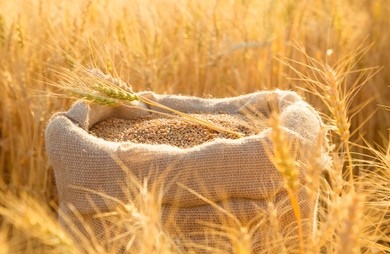
Baking tradition reveals cultural ties that transcend time and cross the seas. This is the case of “ancestral grains”. Our ancestors consumed these grains thousands of years ago. Today “ancestral grains” return to modern kitchens, due to their natural benefits and properties of flavors and textures so valued by the most experienced master bakers.
Einkorn and Kamut are two types of primitive wheat that came to the United States from distant lands and promise to stay through the production of artisanal breads. In this article, we approach its ancient history, its benefits and the most curious aspects surrounding this tradition.
The history of Einkorn wheat and Kamut: an ancient journey
Following the threads of the history of a staple food like wheat is a fascinating task. Researchers of the subject say Einkorn wheat was planted in southwest Asia 10,000 years ago, in the territory that today belongs to Turkey. It is, perhaps, one of the first crops achieved by humans in their development of agriculture as a vital economic activity.
It is believed that its arrival in Europe is due to the rise of trade routes that connected this continent with Asian cultures. Later, Europeans during their trips to the New World introduced Einkorn into the diet of the people of the American continent.
Kamut, on the other hand, has a curious story that seems taken from an adventure novel written by Julio Verne or Emilio Salgari. However, it is not fiction but a reality seasoned with the emotions of transoceanic crossings and family perseverance to achieve their dreams.
It was 1949 in Portugal. The American pilot Earl Dedman was in that Iberian country and received 36 grains of an unusual cereal from a colleague. This colleague told him he had obtained them from a tomb in distant Egypt. Perhaps, he had acquired them through merchants from Cairo, who gave him the explanation that they came from a pharaonic tomb.
Truth is that Earl sent the wheat to his father in the United States. Rube Dedman, a dedicated Montana farmer, sowed the seeds and six years later, he was already reaching for the stars: more than 40 tons of wheat that he called “King Tut’s Wheat.” The history linked to Ancient Egypt caught the people’s eye and made press headlines. At a local fair, the Dedmans exhibited the species of giant wheat, the size of which was twice the size of modern wheat.
At that exhibition fair a teenager named Bob Quinn saw the new wheat. Over the years, the amazement at “King Tut’s Wheat” faded. It was Quinn himself who, almost three decades later, managed to light the spark and interest in this species when he was finishing his doctorate in Plant Biochemistry.
After a failed attempt with a foreign company to produce wheat snacks, Bob and his father Mack’s efforts to cultivate the species did not stop. From a sample that they were able to obtain and they carefully selected, they began to promote organic agriculture. In 1986, both showed their production at the Anaheim Fair in California and the rest is history: the success of Kamut wheat and organic flour sparked great demand among customers. Kamut was chosen as the official name, because it referred, according to Egyptologists, to the ancient meaning of “wheat” in the language of the pharaohs.
In his scientific research, Bob verified the qualities and health benefits of Kamut, a brand that demonstrates the use of original grain and its organic cultivation.
Benefits and properties of Einkorn and Kamut whole
grains
What are the benefits of ancient grains that make us look back at traditions through the Einkorn and Kamut wheat varieties?
In the case of Einkorn (1), it is a cereal low in gluten and rich in protein. Being a whole wheat, it has all the parts of the grain: the bran, the endosperm and the germ, and therefore, it contains B complex vitamins and minerals, that contribute to improving the circulatory system. It also promotes digestion and thanks to the presence of carotenoids, it has natural antioxidant and anti-inflammatory properties.
Kamut (2) is recognized for its antioxidant values, due to its content of minerals such as zinc and vitamin E and the B complex, mainly B1, B2 and B3. It is rich in Omega 6, which gives it energetic properties, and its high fiber content allows us to reach satiety more quickly, which helps to maintain control over appetite and weight.
Six curiosities about the ancient cereals Einkorn and Kamut
- The word wheat in Spanish is «trigo», which is derived from the Latin «triticum», and its meaning is threshed, alluding to the process of shelling or separating the grain from the chaff.
- An essential aspect of ancestral grains is that they have not undergone genetic manipulations, but are original grains, hence this way of calling them.
- The Einkorn species has only 14 chromosomes in its genome, while the Kamut has 28. However, modern wheat has 42 chromosomes.
- Remains of Einkorn wheat were found in the stomach of Ötzi, a 5,300-year-old mummy discovered in the Italian Alps and currently kept in the South Tyrolean Museum of Archaeology, Bolzano, Italy.
- Kamut wheat is also known as Khorasan wheat or Oriental wheat, and its scientific name is Triticum turanicum. Kamut is the trademark name of this cereal.
- Scientific name of Einkorn wheat is Triticum monococcum. Its other common names are Small Spelled or Lesser Escanda.
Making bread with artisanal methods returns to us that kind of magic that rekindles the most valuable things from the past: incredible flavors that do not renounce the benefits of what is natural. That is why at The Curious Baker we defend the idea that our baking tradition is more than bread.
References
(1) https://www.ncbi.nlm.nih.gov/pmc/articles/PMC5707704/
(2)
https://www.ncbi.nlm.nih.gov/pmc/articles/PMC6424920/
Image taken from